

The human spine has natural curves to absorb shock, maintain balance, and enable movement. A natural, gentle inward curve in the lower back region is called lordosis and is perfectly healthy. However, the problem begins when this curvature exceeds its normal limits. This condition, known as hyperlordosis or colloquially as “swayback,” is a common issue.
Hyperlordosis not only can cause chronic pain in the lower back but also affects body appearance. Fortunately, in most cases, this condition is a direct result of lifestyle and is entirely correctable and preventable.
What is Hyperlordosis?
Hyperlordosis is the excessive increase of the inward curvature of the spine in the lumbar region. In this state, the pelvis tilts forward, causing the abdomen to push forward and the buttocks to push backward. To find out if you have hyperlordosis, there is a simple test. Stand with your back against a wall, so that your heels, buttocks, and shoulders are in contact with the wall.
In a normal state, you should barely be able to slide your palm between the curve of your lower back and the wall. If the gap is large enough to easily pass your fist or forearm through, you most likely have hyperlordosis.
Symptoms of Hyperlordosis Beyond a Curve
The symptoms of hyperlordosis are not limited to appearance. Although the most prominent sign is the deep C-shaped curve in the lower back, this condition can cause other complications.
1. Chronic Low Back Pain:
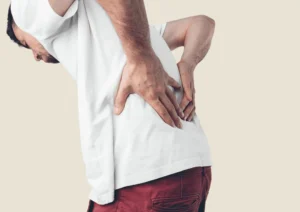
The most common symptom is a dull or sometimes sharp pain in the lower back. This pain usually worsens after prolonged standing or sitting because the back muscles must remain constantly contracted to maintain the posture.
2. Body Appearance:
Even in slim individuals, hyperlordosis causes the abdomen to appear protruded. Also, due to the pelvic tilt, the buttocks appear more prominent than usual.
3.Reduced Flexibility:
This condition can decrease the range of motion of the spine and cause stiffness in the lower back and pelvic region.
What is the cause of hyperlordosis?
In most cases, hyperlordosis is not a structural problem or a disease, but rather the result of a muscular imbalance. This condition, also called Lower Crossed Syndrome, occurs due to modern lifestyle. In a simple word:
· Weak Muscles:
The abdominal muscles (especially the deep core muscles) and the gluteal muscles become weak.
· Tight Muscles:
The hip flexors (due to prolonged sitting) and the lower back muscles become short and tight.
This imbalance pulls the pelvis forward like a cradle and creates hyperlordosis. Factors such as prolonged sitting, abdominal obesity (which pulls weight forward), and pregnancy exacerbate this condition.
Treatment Methods; Restoring Balance to the Body
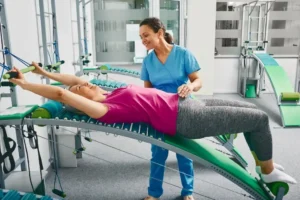
The good news is that hyperlordosis caused by muscular imbalance is well-treated with corrective exercises and physical therapy. Our goal is to reverse this imbalance. This treatment plan has two main parts: releasing the muscles that have become tight and strengthening the muscles that have become weak.
Stretching Tight and Short Muscles
The first crucial step is to release the muscles that pull the pelvis forward and create hyperlordosis. To stretch the muscles at the front of the hip and thigh, which shorten due to excessive sitting, you can kneel on one knee and, while keeping your torso upright, gently push your pelvis forward until you feel a stretch in the front of your thigh.
To release tight back muscles, simple movements like hugging your knees to your chest while lying on your back or assuming a child’s pose position are very effective and remove tension from the lumbar erector spinae.
Strengthening Weak Muscles
Simultaneously with stretching, we must strengthen the muscles that pull the pelvis back and keep the abdomen flat. The main focus should be on the deep abdominal muscles. Exercises like the plank are very effective. Also, exercises where you lie on your back and slowly move opposite arms and legs (without your lower back arching off the floor) are excellent.
Key Exercise: Learning to Flatten the Lumbar Curve
This is the most important exercise for understanding correct body posture. Lie on your back and bend your knees. Now try to contract your abdominal muscles to press your lower back completely flat against the floor. This movement, which is essentially a posterior pelvic tilt, is precisely the opposite of hyperlordosis.
Practicing this simple movement throughout the day will help you consciously correct the position of your pelvis and lower back.
Prevention Methods; Lifestyle Modification
Preventing hyperlordosis is easier than treating it, and the key lies in awareness of body posture and correcting daily habits.
Workplace Ergonomics
If you sit at a desk for long hours, ergonomics are crucial.
- Chair: Your chair should have lumbar support. If it doesn’t, use a small cushion.
- Sitting Posture: Your feet should be flat on the floor and your knees at a 90-degree angle. Avoid slouching or leaning back in your chair.
- Monitor: The monitor height should be at eye level so your neck is also in a neutral position.
Movement and Breaking Patterns
Never sit continuously for more than 30 to 45 minutes. Stand up, walk a few steps, and perform simple stretches like side bends. This prevents the hip flexor muscles from tightening.
Weight Management
Losing excess weight, particularly in the abdominal area, removes direct mechanical stress from the lumbar spine and allows the pelvis to return to its natural position.
Conclusion
Hyperlordosis, in most cases, is not a dangerous disease but rather a postural problem caused by modern lifestyle, especially prolonged sitting. This condition is a sign of imbalance between the anterior and posterior muscles of your body. Its treatment and prevention require a dual approach: stretching tight muscles and strengthening weak muscles.
With awareness of your body posture, correcting workplace ergonomics, and dedicating a few minutes a day to corrective exercises, you can restore balance to your spine and find relief from chronic low back pain.

FAQ
- Is hyperlordosis dangerous?
In most cases stemming from muscular imbalance, it is not dangerous, but it can be a source of chronic low back pain, hip joint stiffness, and reduced quality of life. In very rare cases, severe hyperlordosis can be due to structural spinal problems that require medical evaluation.
- My hyperlordosis is hereditary; is It still treatable?
Many people think their hyperlordosis is hereditary, whereas in reality, they have inherited lifestyle habits (like sitting patterns) from their family. Even if there is a genetic predisposition for joint laxity, it can be significantly improved with corrective exercises.
- How long does it take to treat hyperlordosis with exercise?
This depends on the severity of the problem and your consistency in performing the exercises. With regular stretching and strengthening exercises, many people notice significant improvement in pain and body posture within 4 to 8 weeks.