
Our Services
Knee Surgery
The knee is the largest and one of the most complex joints in the human body. This remarkable joint bears our body weight and allows us to run, jump, and sit. However, this very complexity and constant use make it highly vulnerable to injury and degeneration. Persistent knee pain transforms routine mobility into a constant struggle. Daily life—from climbing stairs to taking a simple walk—is disrupted.
Initially, treatment focuses on non-surgical options like physical therapy, weight loss, medication, and injections (such as PRP or hyaluronic acid). However, at a stage when these methods are no longer effective, knee surgery transforms from a daunting prospect into a necessary and effective solution for restoring quality of life.
When you need Knee Surgery?
The decision for surgery is never taken lightly. It is typically considered when other treatments have failed and the patient faces one or more of the following conditions:
1.Chronic and Debilitating Pain
Pain that persists even at rest or at night, and does not respond to common painkillers.
2.Joint Instability
A feeling of the knee "giving way," frequent locking, or a lack of confidence in the joint while walking. This is often a sign of ligament or meniscus damage.
3.Severe Reduced Range of Motion
When the patient can no longer fully bend or straighten the knee, and this limitation impacts their daily activities.
4.Severe arthritis (Advanced Wear and Tear)
When X-rays show complete cartilage loss and bone-on-bone contact, joint replacement surgery is often the best solution for pain relief.

Common Types of Knee Surgery
Knee surgery” is a broad term. The specific surgical procedure is chosen based on the type of injury, the patient’s age, and their activity level.
- Arthroscopy: This is a minimally invasive procedure. Instead of fully opening the joint, the surgeon makes a few very small incisions and inserts an arthroscope (a small camera) and fine instruments into the knee. Arthroscopy is commonly used to repair or remove a torn meniscus, reconstruct ligaments, or remove loose cartilage fragments. Its major advantage is a much shorter recovery time and less post-operative pain.
- Anterior Cruciate Ligament (ACL) Reconstruction: A torn ACL is one of the most common sports injuries. Since this ligament does not heal on its own, a complete tear causes significant knee instability. In this surgery (often performed arthroscopically), the surgeon uses a graft from another tissue to create a new ligament. This graft can be taken from the patient’s own hamstring or patellar tendon, or from a donor.
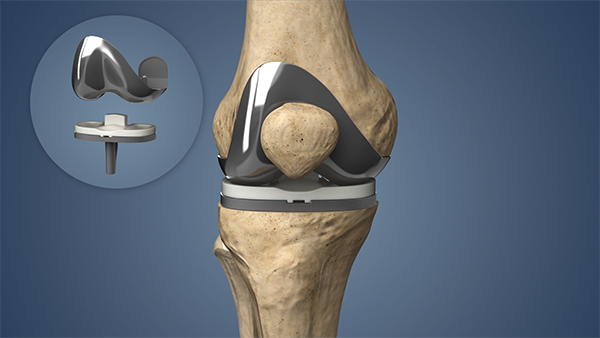
- Total Knee Replacement (Arthroplasty): This surgery is the ultimate solution for advanced arthritis. The surgeon removes the damaged and worn surfaces at the ends of the femur (thigh bone) and tibia (shin bone). These surfaces are then replaced with metal and plastic implants. This creates a new, smooth, and pain-free joint surface. This is one of the most successful surgeries in medical history for pain relief.
- Partial (Unicompartmental) Knee Replacement: Sometimes, arthritis affects only one part of the knee. If the other two parts are healthy, the surgeon may suggest a partial replacement. In this procedure, only the damaged compartment is replaced with a prosthesis. This surgery typically involves a smaller incision, a faster recovery, and a more natural feeling compared to a total replacement, but it is not suitable for all arthritis patients.

What Happens Before and During Surgery?
Preparation is key. Before surgery, the patient undergoes a series of tests, including blood tests, an ECG, and an anesthesia consultation. It may also be necessary to stop taking certain medications (like blood thinners). In the operating room, the patient is placed under general anesthesia (fully asleep) or spinal/epidural anesthesia (numb from the waist down). The choice of anesthesia depends on the type of surgery and the patient’s health.
The surgeon, using sterile techniques, makes the incision and performs the necessary procedure (such as meniscus repair or prosthesis placement). Finally, the incision is closed with sutures or staples and dressed.
Recovery and Rehabilitation
Surgery is only half the journey; the other half is rehabilitation. The importance of physical therapy after knee surgery is as vital as the operation itself. Exercises usually begin on the first or second day after surgery. The primary initial goals are to reduce swelling, prevent blood clots, and gradually restore the joint’s range of motion.
Over time, the focus of the exercises shifts towards strengthening the quadriceps and hamstring muscles. These muscles are the primary supporters of the “new” knee, and their strength is essential for returning to normal activities.

Risks and Potential Complications
Any major surgery carries risks. Knee surgery is no exception, although serious complications are rare.
- Infection: An infection at the surgical site or around the prosthesis can be serious. To prevent this, antibiotics are administered before and after surgery, and the procedure is performed under strictly sterile conditions.
- Blood Clots (Deep Vein Thrombosis – DVT): Immobility after surgery can increase the risk of clots forming in the leg veins. Therefore, blood-thinning medication and encouragement of early movement are crucial.
- Joint Stiffness (Arthrofibrosis): Sometimes, excessive scar tissue forms inside the joint, leading to limited motion. Performing regular and precise physical therapy exercises is the best way to prevent this complication.
Conclusion
The decision to undergo knee surgery is a significant and personal one. It is not a quick fix and requires a commitment to the rehabilitation process. Yet, for patients debilitated by chronic knee pain, surgery can be profoundly transformative. Modern surgical techniques, more durable implants, and advanced pain management protocols have dramatically improved outcomes.
The ultimate goal of knee surgery is to restore the individual to an active, independent, and, most importantly, pain-free life. Consulting with an experienced orthopedic surgeon is the first step on this journey to recovery.

FAQs
It depends on the type of surgery. After a simple arthroscopy, returning to normal activities may take a few weeks. For ACL reconstruction, a full return to sports may take 6 to 9 months. After a total knee replacement, most patients return to daily activities within 3 months, though full strengthening takes longer.
Modern implants are highly durable. With proper care and maintaining an ideal weight, it is expected that over 90% of knee replacements will continue to function well after 15 to 20 years.
Post-operative pain is expected, but it is entirely manageable. Today, combined pain management methods are used, such as nerve blocks, strong pain medication in the first few days, and oral medications. This is “healing pain,” which is different from the debilitating pain experienced before surgery.
Dr. Mirbolook's working hours
Saturday .........................from 10 am to 5 pm
Sunday .........................from 10 am to 5 pm
Monday .........................from 10 am to 5 pm
Tuesday .........................from 10 am to 5 pm
Wednesday .........................from 10 am to 5 pm