
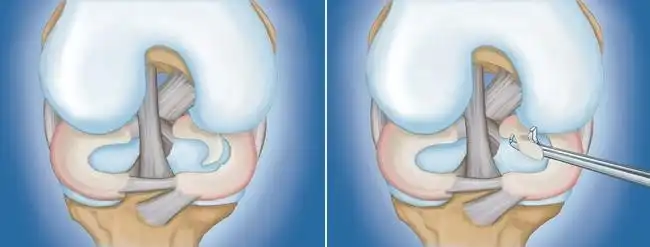
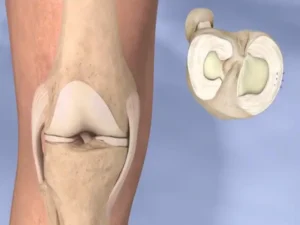
A Meniscus Tear in the knee is one of the most common knee joint injuries, usually resulting from sudden movements, rapid twisting, or excessive pressure applied to the knee. The menisci are two C-shaped cartilaginous structures located between the femur (thigh bone) and the tibia (shin bone), playing a vital role in shock absorption, joint stability, and even distribution of pressure within the knee. Each knee has two menisci: the medial meniscus, situated on the inner side of the knee, and the lateral meniscus, located on the outer part.
Damage to any of these structures can impair knee joint function and, if not treated properly, lead to early-onset arthritis. A torn menisci can occur at any age, but the pattern and type of injury vary among patients.
What are the first signs of a torn meniscus?
One of the most important initial signs of a torn meniscus is pain in the knee area, which typically worsens when bending or straightening the joint. The exact location of the pain depends on which meniscus is injured; in a medial meniscus tear, pain is felt more on the inner side of the knee, whereas in a lateral meniscus tear, it is on the outer part.
Knee swelling is another common symptom that may appear immediately or several hours after the injury. This swelling occurs due to the accumulation of synovial fluid or blood within the joint cavity (joint effusion or hemarthrosis). Sometimes, the knee locks Suddenly or makes clicking sounds during movement. Knee locking occurs when the torn fragment of the meniscus gets caught between the joint surfaces, preventing normal movement.
Many patients also report a feeling of instability or giving way of the knee. The individual might feel that their knee cannot bear body weight or suddenly gives out while walking or going up and down stairs. Also, in some cases, the knee’s range of motion decreases, and the person cannot fully bend or straighten their knee.
Chronic and Delayed Symptoms
If a meniscal tear is not treated in a timely manner, the symptoms may become chronic. Under such conditions, the pain remains mild but persistent and worsens during daily activities such as prolonged sitting, sitting cross-legged, or climbing stairs.
Over time, chronic inflammation may develop in the joint, leading to premature wear of the joint surfaces (early degenerative changes). In cases where the torn meniscal fragment moves within the joint, sharp, sudden pain may appear intermittently.
Methods for Diagnosing a Meniscus Tear
Accurate diagnosis of a meniscal tear requires a combination of a detailed history, physical examination, and imaging techniques. The doctor begins by asking the patient about the mechanism of injury, the type of activity at the time of the incident, and current symptoms such as pain, locking, or swelling of the knee. Then, the knee is examined for its shape, swelling, localized tenderness, and range of motion.
One of the common tests in the physical examination is the McMurray test. In this test, the doctor bends the patient’s leg and then rotates it inward or outward.
If a tear is present, the patient will feel pain or a clicking sound in the knee. The Apley’s compression test is also used to assess the meniscus, where the patient lies prone and the doctor applies downward pressure and rotates the lower leg. Pain during this maneuver can indicate a Meniscus Tear.
Although the physical examination is very helpful, imaging techniques are usually used to confirm the diagnosis. Magnetic Resonance Imaging (MRI) is considered the best and most accurate method for identifying a meniscal tear. MRI can show the details of soft tissues, including the menisci, ligaments, and articular cartilage, with high precision.
This method not only confirms the presence of a tear but also determines its type, location, and severity. In degenerative tears, non-uniform changes in the meniscal signal are usually observed, whereas in acute tears, a clear line of tissue disruption is seen.
Meniscus Tear vs Other Knee Injuries diagnosis
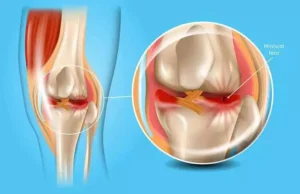
Since many knee injuries have similar symptoms, differentiating a meniscal tear from ligament injuries, tendon inflammation, or arthritis is important. In an Anterior Cruciate Ligament (ACL) injury, instability and a popping sound at the moment of injury are usually more severe, and swelling appears earlier, whereas in a torn meniscus, swelling may be delayed.
In tendinitis or bursitis, the pain is usually localized and without joint locking. A thorough physical examination and the use of MRI play a key role in the differential diagnosis.
The Importance of Timely Diagnosis
Early diagnosis of a meniscal tear is very important because timely treatment can prevent the progression of the injury and the onset of arthritis. Small, superficial tears may heal with rest, ice, anti-inflammatory medications, and physical therapy. However, larger tears or those that cause knee locking usually require arthroscopic surgery.
Delaying diagnosis and treatment can lead to the gradual loss of cartilage tissue and joint destruction.
Conclusion
A Meniscus Tear in the knee is a common but treatable knee joint injury that can affect anyone, from young athletes to the elderly. Timely and accurate diagnosis, based on history, physical examination, and appropriate imaging, is the key to successful treatment. Ignoring initial symptoms such as localized pain, locking, or knee swelling may lead to permanent joint damage.
Therefore, if any unusual signs appear in the knee, immediate consultation with an orthopedic specialist is essential. Correct treatment and proper care not only improve knee function but also prevent long-term complications such as early-onset arthritis.
FAQ
- What is the knee meniscus and what is its function?
The menisci are two C-shaped cartilages inside the knee joint, located between the femur and the tibia. Their functions are to absorb shock, distribute body weight during movement, and increase the stability of the knee joint. Without the menisci, direct pressure between the bones can cause rapid joint deterioration and the onset of arthritis.
- What is the main cause of a meniscus tear?
A meniscal tear is usually caused by sudden movements or rapid twisting of the knee while the foot is planted on the ground. This injury is more common in sports such as football, basketball, tennis, or skiing. In older patients, the tear may occur gradually due to wear and tear of the cartilage tissue, which is called a degenerative tear.
- What are the main symptoms of a torn meniscus?
Pain in the knee, especially when bending and straightening, swelling, a popping or clicking sound in the joint, a sensation of locking, or an inability to move the knee through its full range of motion are common signs of a meniscal tear. In some patients, the knee feels unstable or gives way during walking.