

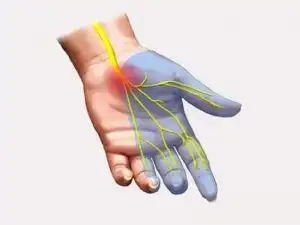
Carpal Tunnel Syndrome (CTS) is one of the most common neuromuscular disorders of the upper limb, caused by excessive pressure on the median nerve at the wrist level. The median nerve passes from the forearm through a narrow tunnel, the carpal tunnel, into the palm of the hand. This osteofibrous tunnel has a confined structure that, in addition to the median nerve, also contains the flexor tendons of the fingers.
When the space inside this canal decreases for any reason or the surrounding tissues swell, the median nerve becomes compressed, leading to bothersome symptoms such as numbness, tingling, and pain in the hand and fingers. Carpal Tunnel Syndrome is more common among women than men and typically manifests in middle age. Numerous factors can play a role in the occurrence of this condition, which we will examine in this post.
Symptoms of Carpal Tunnel Syndrome
Initial symptoms usually appear as tingling, numbness, or a pins-and-needles sensation in the thumb, index finger, middle finger, and the radial half of the ring finger. These symptoms particularly worsen at night during sleep and can wake the person from sleep. Many patients report having to shake or hang their hand to reduce this unpleasant sensation and alleviate the numbness.
In later stages, pain may radiate from the wrist area towards the forearm or even the arm. Weakness in the muscles of the palm, especially in the area near the thumb (thenar eminence), is one of the more advanced signs of the disease. Under such conditions, the patient may have difficulty with precise movements like grasping small objects, typing, or opening bottle caps.
If pressure on the median nerve persists for a long time, it may lead to atrophy (wasting) of the thenar muscles, which visibly appears as thinning of the palm. Other symptoms include a sensation of electric shock or shooting pain in the fingers. This sensation sometimes occurs when bending or straightening the wrist or when holding heavy objects.
Diagnosing Carpal Tunnel Syndrome
Accurate diagnosis of Carpal Tunnel Syndrome is based on a combination of the patient’s history, clinical examination, and electrodiagnostic tests. The doctor begins by asking the patient about their symptoms, occupation, duration of pain, and activities that exacerbate or alleviate the symptoms, looking for a characteristic pattern of the disease.
In the physical examination, there are two famous tests used to assess median nerve compression. One is Tinel’s sign, where the doctor gently taps over the course of the nerve at the wrist. If there is damage, the patient feels an electric shock or tingling sensation in the fingers. The other test is the Phalen’s maneuver. In this test, the patient holds both wrists in a flexed position against each other for about one minute; if symptoms of numbness or pain intensify, the likelihood of Carpal Tunnel Syndrome is high. Para-clinical methods are also used to confirm the diagnosis. Nerve Conduction Studies (NCS) and Electromyography (EMG) are among the most important diagnostic tests in this area.

Treatment for Carpal Tunnel Syndrome
Treatment for this condition varies depending on the severity of symptoms, their duration, and the underlying cause. In mild to moderate cases, treatment is usually non-surgical and conservative. The first step is to reduce pressure on the median nerve by using a special wrist splint. These splints are typically used during sleep or repetitive activities and prevent excessive flexion of the wrist.
Alongside this, Non-Steroidal Anti-Inflammatory Drugs (NSAIDs) may be used to reduce pain and swelling. In some patients, a corticosteroid injection into the carpal tunnel can temporarily alleviate symptoms. Physical therapy also plays an important role in treatment. Stretching and strengthening exercises for the forearm muscles, gentle massage, the use of therapeutic ultrasound, and electrical stimulation are among the useful methods for improving nerve function and reducing inflammation.
In cases where non-surgical treatments are ineffective, or the patient experiences severe weakness, muscle atrophy, or persistent pain, carpal tunnel release surgery is recommended. In this procedure, the surgeon cuts the transverse carpal ligament that forms the roof of the tunnel to create more space for the nerve and relieve pressure on it.
Prevention and Post-Treatment Care
Preventing Carpal Tunnel Syndrome is largely possible by observing ergonomic principles in work and daily life. Individuals who use computers or mobile phones for extended periods should pay attention to the position of their wrist and the angle of their hand relative to the keyboard. Taking short breaks during work, regularly stretching the fingers, and avoiding prolonged wrist flexion can reduce the risk of developing this condition.
Maintaining a healthy body weight, managing chronic diseases like diabetes, and avoiding excessive salt or caffeine intake are also effective in improving nerve blood flow. After treatment, whether non-surgical or surgical, adhering to the doctor’s instructions for rehabilitation is very important. Temporary use of a splint, performing gentle stretching exercises, and avoiding heavy repetitive movements are among the measures that aid nerve recovery.

Conclusion
Carpal Tunnel Syndrome is a common and treatable hand problem caused by pressure on the median nerve. Neglecting initial symptoms like tingling or numbness in the fingers can lead to muscle weakness and permanent damage. Early diagnosis through clinical examination and electrodiagnostic tests is the key to successful treatment.
Most patients improve with simple non-surgical methods such as splinting, medication, and physical therapy, but in severe cases, surgery is the best option. Awareness of risk factors and adherence to ergonomic principles in the workplace can prevent the occurrence of this disorder and significantly improve patients’ quality of life.
FAQ
- What is Carpal Tunnel Syndrome?
Carpal Tunnel Syndrome is a condition in which the median nerve is compressed at the wrist level, causing numbness, tingling, and pain in the fingers and palm.
- What factors cause this condition?
Repetitive wrist movements, excessive typing or computer work, constant use of mobile phones, heavy and strenuous manual labor, obesity, diabetes, hypothyroidism, and pregnancy are common causative factors.